
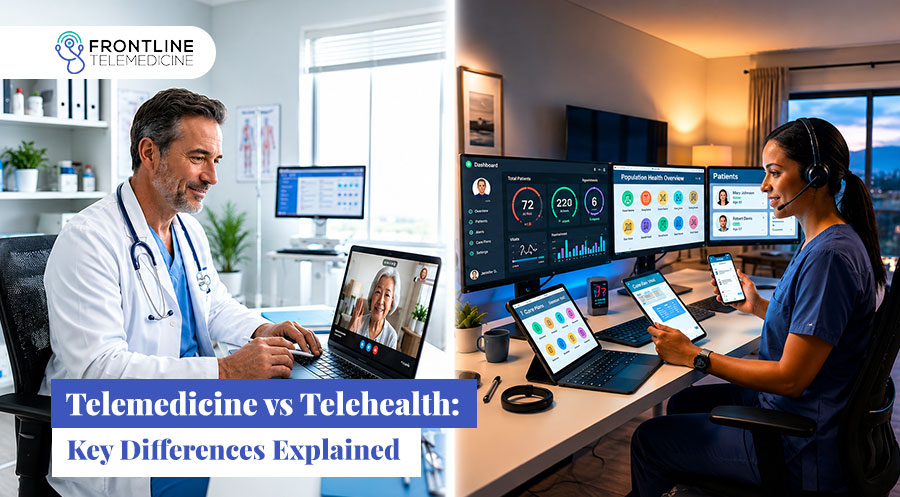
The delivery of modern healthcare is now relying heavily on digital innovation to bridge critical gaps in patient care and operational staffing. Recent health data shows that over 80% of modern medical institutions have adopted remote patient systems permanently after the pandemic.
However, healthcare administrators like you are frequently struggling to distinguish between similar digital medical terms while upgrading facility technology. Selecting the incorrect technological application costs your hospital massive revenue and decreases overall daily staff productivity.
Two such terms are Telemedicine and Telehealth, which people often throw around interchangeably despite their distinct operational boundaries. You may often feel completely overwhelmed trying to navigate these two complex definitions during high-stakes staffing shortages. We have clarified these two terms to save you critical administrative time and valuable money.
The present blog explores the difference between telemedicine and telehealth and how each impacts your clinical workflows and daily operational costs. You will discover the practical boundaries of modern virtual healthcare services through clear medical definitions.
Our analysis explains how specialized telemedicine services resolve night shift provider shortages in busy medical facilities. We have broken down legal rules, structural tech requirements, and insurance coverage trends for medical leaders.
Let’s dive in.
What Is Telehealth?
Telehealth represents a broad infrastructure of technologies used to deliver virtual medical education, health administration, and remote clinical services. Broad health systems utilize virtual platforms to manage public wellness and clinical training across entire regional populations.
This system covers administrative meetings, health education, and public tracking, besides direct patient care. Clinical partners implement these broad frameworks to build complete medical networks for vulnerable rural communities.
Clinical vs. non-clinical scope of telehealth
The overarching framework includes non-clinical operations like provider training videos and public health tracking across multiple counties. Here, you use these platforms to coordinate administrative tasks and manage medical billing data across large regional networks.
The clinical side allows nurses to review blood sugar logs and send automatic health alerts to patients. Such a comprehensive approach builds a strong foundation for broad community health tracking and provider continuing education.
Technologies that power telehealth
Core Communication and Monitoring Technologies
- Secure Video Links: With HD video links, you can connect distant medical clinics for immediate peer consultations.
- Mobile Health Apps: Mobile health applications will allow your patients to track daily nutrition choices from home.
- Online Patient Portals: With secure online patient portals, it’s possible to deliver diagnostic lab results to individuals very quickly.
Data Management and Wearable Technologies
- Integrated Health Records: Update clinical information across multiple healthcare facilities automatically using integrated electronic health records (HER).
- Advanced Wearable Sensors: Advanced wearable sensors can seamlessly track patients’ heart rhythms during regular daily activities outside hospital walls.
- Remote Monitoring Devices: You can transmit real-time blood pressure readings using remote monitoring devices directly to local nursing teams.
- Encrypted Messaging Platforms: Encrypted text messaging platforms facilitate rapid communication between clinical staff and active patients.
What Is Telemedicine?
Medical teams define telemedicine as the delivery of direct clinical care through remote communication tools. You use this specific technology to diagnose illnesses, prescribe medications, and track acute symptoms from afar.
Physicians utilize these focused clinical connections to stabilize patients inside facilities during acute nighttime medical crises.
Synchronous vs asynchronous telemedicine modalities
When it comes to synchronous telemedicine, live video chats enable immediate interaction between a distant physician and a patient. You utilize this instant connection when immediate clinical decision-making or urgent diagnostic evaluations are required at the bedside.
On the other hand, in asynchronous telemedicine, you utilize store-and-forward telemedicine to transfer medical images, lab results, and patient histories securely. Specialists can use them for later clinical review. Providers can evaluate complex cases efficiently without requiring immediate physical presence during busy hospital shifts.
What does an online doctor consultation typically involve?
A standard online doctor consultation begins when a remote physician accesses your local EHR system. The practitioner conducts a detailed virtual doctor visit to evaluate visible symptoms using high-resolution cameras.
You will receive immediate diagnostic assessments and digital drug prescriptions sent directly to your local facility pharmacy. A focused process like this delivers targeted medical solutions to patients without requiring an expensive, stressful physical transfer.
Telehealth vs Telemedicine: What Is The Difference Between Telehealth and Telemedicine
Even many hospital executives confuse these terms because both systems utilize digital screens to connect people with medical professionals. You must realize that the telehealth vs. telemedicine difference centers entirely on the specific scope of the service.
Telehealth represents the broad infrastructure, while the second term refers exclusively to direct clinical treatment for illnesses.
Digital health solution providers structure hospital workflows to leverage the advantages of both digital platforms inside your medical facility. Here’s a side-by-side difference between the two for your better understanding:
| Point of difference | Telehealth Framework | Telemedicine Application |
| Scope of Care | Telehealth encompasses clinical treatments and broad administrative healthcare operations simultaneously. | It focuses exclusively on direct clinical diagnosis and medical treatment. |
| Primary Users | This includes hospital executives, medical billers, public health officials, and patients. | This consists strictly of licensed physicians, advanced practice providers, and patients. |
| Technology Tools | The telehealth framework utilizes telehealth technology (video, apps, portals) alongside advanced electronic tracking systems. | It relies primarily on real-time video links and medical peripheral devices. |
| Core Objective | The sole objective is to improve general health systems and public health education. | The key aim is to deliver rapid clinical assessments for individual sick patients. |
| Reimbursement | Involves complex grants, administrative budgets, and public wellness program funding. | Follows standard insurance billing codes for individual clinical patient visits. |
Real-World Telehealth Examples Across Care Settings
Nowadays, when local staff face extreme fatigue, hospital leaders deploy diverse digital programs to maintain high clinical standards. You can observe how these separate systems function by looking at actual everyday healthcare operations.
Remote patient monitoring
Clinicians are now utilizing remote patient monitoring to track vital signs of heart failure patients living at home. You receive automated alerts when a patient experiences a sudden weight gain or a dangerous blood pressure spike.
Such constant surveillance prevents unnecessary hospital readmissions. It also allows for early medication adjustments before complications arise.
Online medical consultation
A patient in a rural care setting schedules an online medical consultation with a licensed dermatologist to evaluate a spreading skin rash. The hospital assistant uploads high-resolution photographs through a secure portal to receive an expert opinion within 24 hours.
A convenient system like this eliminates long waiting room lines and provides rapid clarity to worried families.
Public health tracking
State agencies use centralized data systems to monitor infectious disease outbreaks across multiple school districts simultaneously. During severe flu seasons, you can analyze geographic health trends to distribute emergency medical resources to local clinics.
By managing proactively, you can keep the public informed and protect vulnerable populations from preventable health risks.
Specialized Telemedicine Services Transforming Hospital Care
There are specialized clinical programs that deliver targeted physician expertise directly to patient bedsides. And to be precise, they don’t require expensive local hiring campaigns. You can transform your overnight medical coverage by utilizing expert remote doctors who understand acute facility workflows.
Below are Frontline Telemedicine’s disruptive telemedicine services that are revolutionizing hospital care:
Tele Hospitalist Programs: Round-The-Clock Inpatient Coverage Remotely
Our specialized Telehospitalist network provides immediate clinical oversight for admitted patients inside your local medical facility.
Remote doctors round on patients virtually to ensure your daytime staff can go home on time. A continuous care model keeps your beds full and maintains excellent clinical safety standards every day.
Advantages:
- Virtual rounding maintains excellent patient safety standards.
- Remote doctors provide immediate clinical oversight continuously.
- Admitted patients receive constant high-quality care.
- Local medical facilities keep beds completely full.
Tele Nocturnists: Overnight Physician Coverage Without On-Site Staffing
Our Tele Nocturnists manage the entire admissions pipeline when your local doctors are sleeping at home. You can eliminate physician burnout by passing heavy nighttime phone calls to our dedicated remote emergency medicine teams.
Frontline Telemedicine’s overnight support protects your budget while ensuring expert clinical decisions happen during the early morning hours.
Advantages:
- Remote overnight teams eliminate provider fatigue entirely.
- Expert physicians manage your complete admissions pipeline.
- Dedicated doctors answer heavy nighttime phone calls.
- Hospitals protect budgets during early morning hours.
Tele-SNF: Skilled Nursing Facility Support Via Virtual Physicians
Implementing a Tele-SNF program allows your nursing home staff to treat acute changes in place safely. You can easily avoid the stress of unnecessary midnight ambulance rides for fragile residents who suffer from chronic conditions.
Remote doctors will stabilize patients inside their familiar rooms, which protects your facility’s revenue and prevents hospital penalties.
Advantages:
- Fragile residents avoid stressful midnight ambulance rides.
- Nursing home staff treat acute changes safely.
- Virtual physicians stabilize patients inside familiar rooms.
- Skilled facilities prevent expensive hospital readmission penalties.
Tele-MD APP Supervision: Supervising Advanced Practice Providers At A Distance
The Tele-MD app supervision of Frontline Telemedicine connects your local nurse practitioners with board-certified physicians for immediate chart reviews. Be able to expand your clinical service lines safely and also meet strict state regulations regarding medical collaboration agreements.
Well-structured remote oversight empowers your local frontline staff to practice with total confidence during complex cases.
On-Demand Tele Cross Coverage for Healthcare Facilities
Our Tele Cross Coverage service provides seamless physician-to-physician support, ensuring continuous patient care when your primary providers are unavailable, off-duty, or managing high patient volumes. Through secure telemedicine technology, hospitals gain access to experienced physicians who can assist with patient management, consultations, admissions, and urgent coverage needs—helping reduce provider burnout, improve response times, and maintain consistent quality of care 24/7.
How Telehealth Fits Into the Digital Health Ecosystem
Your hospital board must understand where these two specific technical terms fit within the world of modern medical software. Both digital health and telehealth are overlapping circles of innovation that streamline your daily clinical operations:
Defining digital health
The industry defines the digital health vs. telehealth boundary by analyzing the entire technological ecosystem of modern medicine. Digital health represents the largest category, containing:
- Artificial Intelligence Tools.
- Robotic Surgery Systems.
- And Consumer Fitness Tracking Bands.
The broad definition covers every piece of technology that gathers or processes human health data.
The Integration of Digital Health and Telehealth in Modern Healthcare
Digital health and telehealth work together to create a connected healthcare ecosystem that improves communication, data sharing, and patient access to care across different locations. Healthcare facilities can use telehealth platforms to securely transmit information from digital health devices, helping clinicians make faster, more informed decisions while improving overall care coordination and operational efficiency.
Benefits and Limitations of Telehealth and Telemedicine
Evaluating virtual care systems requires a balanced analysis of positive clinical impacts and structural operational challenges. You must weigh these separate factors carefully to build a resilient remote medical program for your community:
Benefits and Operational Advantages
- Enhanced Patient Access
Virtual platforms eliminate long travel distances for remote individuals. They save significant transportation money and encourage early medical intervention before crises.
- Optimized Workforce Efficiency
Modern health systems balance patient loads across regional clinics. Remote specialists are filling unexpected schedule gaps and protecting clinical budgets.
- Reduced Provider Exhaustion
Strategic digital scheduling distributes heavy clinical workloads evenly. It prevents local nursing teams from reaching points of extreme, dangerous physical exhaustion.
Barriers and Structural Limitations
- Physical Exam Constraints
Comparing remote care to in-person evaluations reveals clear clinical limits regarding manual diagnostics. For instance, accurately listening to a patient’s heart murmurs is a limitation in this regard.
- Strict Licensing Borders
You may face restrictive state licensing regulations that prevent qualified remote doctors from practicing across specific geographic state lines.
- The Digital Divide
Poor internet connectivity in rural towns creates an unfair gap for the vulnerable. Isolated patients entirely lack reliable virtual healthcare access.
How to Choose the Right Virtual Healthcare Service for Your Needs?
Selecting the ideal virtual care solutions depends entirely on the specific clinical goals your medical institution wants to achieve. Before investing in expensive new digital health platforms, we suggest auditing your current facility workflows:
When is telemedicine the right fit?
Choose direct clinical platforms when your local patients require immediate drug prescriptions or rapid acute disease diagnoses. The focused system works perfectly for managing stroke emergencies and delivering urgent psychiatric assessments during midnight hospital shifts.
Our expert physicians use these direct connections to guide local nurses through life-saving stabilization protocols in real time.
When broader telehealth is mandatory?
Broad health networks fit best when your facility wants to track diabetic populations over several months. You can deploy these systems to host group prenatal classes or coordinate complex discharge planning across separate social work agencies.
It provides excellent educational resources without tying up your acute care doctors in long administrative meetings.
Insurance coverage: What Insurance payers typically cover in 2026–2027?
Navigating telehealth cost and insurance rules requires checking the latest regional Medicare parity laws inside your state. Most modern insurance payers cover direct video doctor visits. Nevertheless, they place strict limits on asynchronous data transfers.
In order to guarantee full reimbursement from commercial lines, you must structure your billing department to document clinical necessity.
The Future of Remote Patient Care
The future of telemedicine and remote patient care will force a complete rewrite of traditional healthcare delivery models. Ultimately, both branches of virtual care will win because digital tools handle data tracking while human providers continue delivering essential emotional comfort and personalized care.
Some skeptics may worry that automation might damage the core human empathy that heals frightened patients during dark moments. On the contrary, optimists show that advanced software removes heavy paperwork. In this way, doctors can focus entirely on actual clinical care.
However, this future will shape telehealth and telemedicine in distinct ways:
- The Expansion of Global Telehealth
On a broader scale, telehealth will completely revolutionize health systems by automating the administrative and educational burdens. These setbacks drain institutional resources at a deeper level. Advanced software streamlines public health tracking, simplifies remote clinical training, and automates heavy paperwork.
- Telemedicine Models Solve the Physician Burnout Crisis
On the clinical front, targeted telemedicine applications directly address the day-to-day operational strain on practitioners. To be specific, forward-thinking executives recognize that tele-hospitalist models solve the physician burnout crisis. With these advanced programs, you can safely distribute heavy night-shift workloads to remote teams.
Stabilize Your Hospital Operations With Frontline Telemedicine
Healthcare organizations are building resilient ecosystems by bridging institutional infrastructure and precise clinical interventions.
While telehealth manages administrative data frameworks, targeted telemedicine delivers acute medical expertise at the bedside.
By partnering with our expert medical team today, you can eliminate chronic provider shortages and reduce physician burnout. Frontline Telemedicine provides specialized virtual coverage that seamlessly integrates with your existing emergency workflows and local electronic tracking systems.
Our board-certified physicians support your frontline nurses, protect facility revenue, and improve overall patient survival rates.
Contact Frontline Telemedicine today to design a reliable, compliant remote doctor program for your healthcare system.
Frequently Asked Questions
1. Can a tele-hospitalist prescribe medications?
Yes, a Tele Hospitalist possesses full legal authority to prescribe emergency medications through secure electronic pharmacy networks. You receive immediate drug updates inside your local hospital system after the remote physician completes the evaluation.
2. What conditions cannot be treated through telemedicine?
Conditions requiring immediate physical surgery, complex wound packing, or hands-on fracture reductions cannot utilize remote medical systems. You must treat these high-acuity trauma cases inside a physical emergency department with on-site clinicians.
3. How does Tele-SNF differ from standard nursing home care?
A Tele-SNF program brings immediate physician expertise directly to the bedside via video links during off-hours. Standard care often relies on phone trees, which results in slow response times and unnecessary hospital transfers.
4. What technology is required for a telehealth visit?
You need a reliable internet connection, a high-definition camera, and a secure, HIPAA-compliant video application platform. Hospitals integrate specialized medical peripheral devices to transmit live vital signs to distant specialists during consultations.
5. Does Medicare cover both telehealth and telemedicine services?
Medicare reimburses both digital health services, but strict geographic rules and facility type limitations apply to various claims. You must verify current federal guidelines to ensure your remote medical programs qualify for complete financial reimbursement.
6. Is telehealth HIPAA-compliant?
Virtual health platforms maintain complete compliance by utilizing advanced encryption, secure cloud storage, and strict user authentication protocols.
Your facility must sign formal business associate agreements with software vendors to protect sensitive patient privacy.
7. How is digital health different from both telehealth and telemedicine?
Digital health represents the complete technological umbrella, including artificial intelligence tools, medical wearables, and electronic health databases.
The other terms define specific communication systems used to deliver remote patient education and direct medical treatments.