
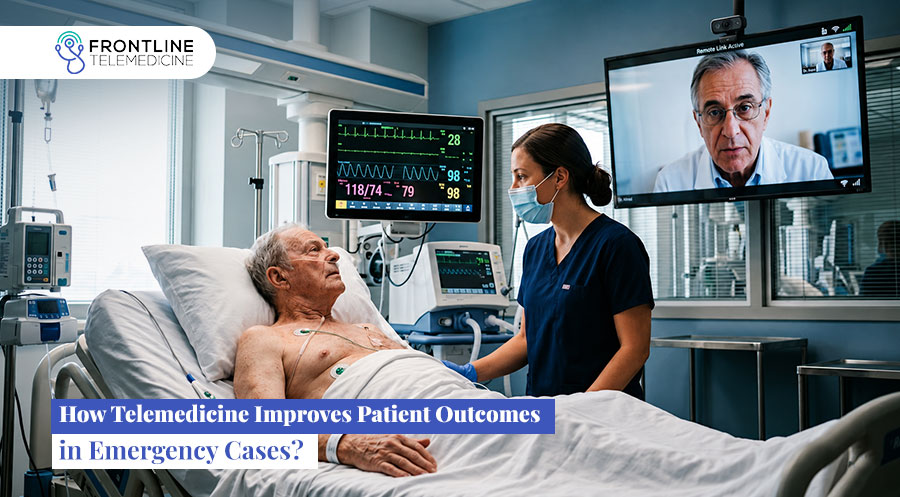
A patient suffers a stroke in a remote area at 2 AM. 30 years ago, the nearest neurologist lived 2 hours away. Cut to today – a specialist appears on a screen within minutes.
That difference? Telemedicine in emergency care has transformed how hospitals respond to critical moments. Now, every second matters when someone’s life hangs in the balance.
Most people think emergency medicine means rushing to a hospital building. Nevertheless, the reality looks different now. There are specialists who guide paramedics through complex decisions when patients are still in ambulances. Intensivists can closely monitor ICU beds from different cities and so on. It’s a major shift representing one of healthcare’s most significant transformations.
As a hospital administrator or chief medical officer, you can manage staff shortages more effectively. The patients at your hospital setting get expert attention when they need it most. Moreover, it marks a dramatic improvement in clinical outcomes across emergency departments nationwide.
The blog post explores how telemedicine in emergency care boosts survival rates and treatment quality for your patients. See how remote emergency consultations facilitate crucial decision-making and how faster diagnosis with telemedicine saves lives.
Our article also highlights technologies that ensure telemedicine specialists have access to rural Emergency Room (ER) units. We have explained how to implement emergency telemedicine services through partnerships while streamlining the virtual care pathway.
Stay tuned to uncover critical insights!
What Is Telemedicine in Emergency Care?
Emergency telemedicine services refer to the use of high-speed data to provide immediate clinical care remotely. It involves the use of secure video links and real-time data streaming to connect doctors, paramedics, emergency nurses, and physicians with patients in various locations.
Standard telehealth services only allow patients to book appointments many weeks in advance. However, virtual care in emergency situations happens in real time. For example, an on-site paramedic treating a cardiac event can instantly synchronize with a remote cardiologist through telemedicine.
How Emergency Telemedicine Services Differ From Standard Telehealth?
Emergency systems require much higher bandwidth and immediate connectivity than standard scheduled virtual doctor appointments. Your healthcare setting needs specialized equipment that integrates with life-saving tools. This includes systems such as defibrillators and advanced cardiac monitors today.
Ordinary telehealth handles chronic conditions. On the other hand, the emergency systems manage issues like stroke, active trauma, or sudden respiratory failure events. These services prioritize immediate physician availability to ensure that critical care begins before the patient reaches your hospital.
Key Technologies Powering Virtual Care in Emergency Situations
Emergency response systems have been found to be much more than just voice communication. Hospitals are now integrating a sophisticated ecosystem of hardware and software to bridge the gap between the field and the hospital:
- 5G networks and HD cameras for accurate assessments.
- Portable devices facilitate the transmission of crucial diagnostic data within a few seconds.
- AI algorithms are interpreting vast, complex datasets to enable swifter decision-making.
- Wearable sensors can send critical physiological data, vital signs, to the trauma team.
- Real-time video consultation connecting paramedics with ER physicians.
- Smart triage tools prioritize patients based on severity.
Faster Triage and Early Intervention Through Remote Emergency Consultations
In terms of emergency care, every minute costs lives. Even a minor wrong diagnosis, incorrect decision, or delayed treatment has the potential to create severe complications.
Remote emergency consultations dramatically shorten the time gap between patient arrival and expert assessment. How the individual Emergency Department (ED) operates depends on appropriate triage, in which life-threatening situations receive the highest priority.
Pre-Hospital Care: Connecting Paramedics With ER Physicians in Real Time
Paramedics use real-time video consultation during emergencies to receive expert guidance while they are still en route. You will see better survival rates when doctors start directing treatments from miles away using these advanced mobile links.
An instant connection enables faster diagnosis via telemedicine during the crucial first minutes of a medical crisis.
AI-Powered Triage Tools and Their Impact on Patient Prioritization
AI algorithms critically analyze incoming patient data to identify those who need immediate surgical intervention or specialized cardiac care. You can implement emergency triage via telemedicine to sort your patients based on the actual severity of symptoms.
A disruptive technology like this removes human bias and ensures that the sickest patients receive the earliest medical attention.
How Remote Assessment Shortens Door-to-Treatment Time?
A curated tele-hospitalist model enables specialists to perform immediate, high-level evaluations during the initial assessment. Simultaneously, it bypasses traditional delays that are likely to occur. For example, when it comes to stroke patients, they need intervention within specific time windows. Traditional systems required local physicians to examine patients first. Only then could specialists join consultations.
Remote evaluations allow surgeons to prepare the operating room while the patient is still moving toward the operating room. Your hospital experiences reduced emergency room wait times because the clinical team already knows exactly what the patient needs.
Remote patient monitoring in emergencies gives doctors a head start on planning complex life-saving procedures before arrivals.
Telemedicine in ICU and ER: Expanding Specialist Access at the Point of Crisis
Telemedicine in ICU and ER settings reveals how specialty expertise reaches places that lack full-time specialists. Rural hospitals simply can’t afford enough to employ cardiac surgeons, neurologists, and infectious disease experts.
Digital solutions enable these smaller facilities to tap into world-class expertise at any time of day. As a hospital administrator, you can manage budgets effectively while patient outcomes improve dramatically:
Tele-ICU: 24/7 Intensivist Oversight for Critical Care Patients
The ICU and ER telemedicine model provides constant monitoring by board-certified doctors for your most unstable patients. You benefit from telemedicine specialist access in rural ER units that otherwise might struggle with complex patient needs.
Continuous oversight prevents small clinical changes from becoming major, life-threatening events for patients in the ICU.
Telestroke Programs: The Gold Standard in Remote Emergency Consultations
The neurologists in your hospital can use remote emergency consultations to evaluate stroke symptoms. It’s also possible to authorize time-sensitive clot-busting medications for their patients. You see a dramatic increase in positive neurological outcomes when your patients receive these specialized assessments within the hour.
Such a rapid response protects brain function and significantly improves stroke survivors’ long-term quality of life.
Telecardiology and Tele-Neurology in the Emergency Department
Cardiologists can review electrocardiograms remotely to identify heart attacks before the ambulance arrives at the local hospital facility. With specialized telemedicine, a patient presenting with chest pain gets immediate expert assessment.
Moreover, neurologists can easily guide the evaluation of patients with sudden neurological changes. Immediate access to experts significantly improves care outcomes. The expertise of the telehealth specialists also prevents misdiagnosis and inappropriate treatments.
How Telemedicine for Critical Care Improves Patient Outcomes?
In rural areas, telehealth services are transforming access to healthcare in a revolutionary way. When you integrate telemedicine for critical care, you create a safety net that captures every declining vital sign. This proactive approach allows medical teams to intervene long before a patient experiences a full cardiac arrest.
Experience improved patient survival rates through telemedicine, which offers constant surveillance and rapid access to specialized clinical knowledge. Take a look at the impacts of critical care telehealth in enhancing patient health outcomes:
- Enhanced Monitoring
Sophisticated software tracks patient trends and alerts doctors when blood pressure or heart rate starts to fluctuate dangerously. You can catch sepsis or respiratory failure early because the system never stops watching your most vulnerable patients.
- Reduced Errors
Minor Diagnostic mistakes are common in high-pressure emergency room settings today, with detrimental effects. With second opinions from remote specialists, it’s possible to prevent such mistakes.
You ensure that every prescription and treatment plan undergoes a rigorous review by an expert in that field.
- Faster Stabilization
Instant access to experts allows a Critical Access Hospital to begin advanced life support protocols much sooner than traditional staffing models allow.
- Resource Optimization
Your on-site staff can focus on physical procedures while remote doctors handle the heavy data analysis and documentation. An effective division of labor improves efficiency and reduces the physical burnout often felt by frontline medical workers today.
Telemedicine for Urgent Care: Reducing ER Overcrowding Without Compromising Quality
It’s evident that low-acuity cases often overcrowd emergency rooms, diverting valuable resources from patients in critical condition. They are the ones who are truly fighting for survival and need immediate attention.
You can implement telemedicine for urgent care to redirect these minor cases to virtual providers instead of physical beds. Virtual health solutions clear the waiting room for genuine emergencies. At the same time, it continues to provide high-quality care to patients with minor illnesses.
Patients truly appreciate getting their prescriptions and medical advice from the comfort of their homes without the long wait. In this way, you can improve overall hospital workflow by using digital portals for non-emergency consultations and triage.
A balanced approach ensures that your emergency department remains ready for the most critical life-threatening situations at all times.
Challenges and Limitations of Telemedicine in Emergency Settings
Implementing virtual care and Tele-nocturnist services comes with significant operational and technical challenges. Healthcare facilities must invest in careful planning, secure infrastructure, and reliable connectivity to ensure these digital health programs remain effective during every medical crisis. Addressing these barriers is essential for maintaining uninterrupted overnight coverage, timely clinical decision-making, and high-quality patient care.
Technical and Connectivity Barriers in Remote Emergency Consultations
Rural areas often suffer from poor internet speeds and connectivity issues. It can disrupt the emergency department telehealth workflow at critical moments. You need redundant systems and satellite links to guarantee that your connection stays live when life is on the line.
Technical failures can cause dangerous delays in treatment if your medical facility lacks a backup plan.
Regulatory, Licensing, and Reimbursement Challenges
Different states have varying rules about which doctors can provide remote care across geographical borders for their patients. There are complex insurance reimbursement policies that you ought to navigate efficiently.
By doing this, you can ensure that your hospital receives fair payment for virtual medical services. These legal hurdles can slow down the adoption of life-saving technology in many smaller healthcare systems today.
Equity Gaps: Who Gets Left Behind in the Telehealth Emergency Revolution
Poor communities may lack the devices or high-speed data plans needed to access virtual care services during a crisis. In this regard, you need to ensure equitable access so that every person benefits from advances in modern medical technology.
Ensuring that no patient is ignored based on their financial status remains a core mission for your team.
The Future of Telemedicine in Emergency Care
We believe the next decade will bring seamless integration between wearable health sensors and hospital emergency computer systems. The future of telemedicine holds the following developments:
- AI is predicting medical emergencies before the patient even experiences the first symptoms.
- Augmented reality will let specialists see exactly what bedside physicians see.
- Next-generation 5G networks will eliminate connectivity concerns everywhere.
- Remote robotic devices will allow specialists to perform procedures virtually.
- Integration with wearable sensors will predict emergencies before they even develop.
- Remote patient monitoring in emergencies will become the norm rather than the exception.
- Regulatory frameworks will eventually standardize healthcare protocols across all states.
- Insurance companies will recognize the financial benefits of specialized oversight.
- Emergency medicine workflows will look completely different within five years.
- Automated data systems will streamline the entire patient intake process.
- The gap between field response and hospital care will eventually disappear with effective note-taking.
How Healthcare Systems Can Implement Emergency Telemedicine Services Successfully?
Starting a virtual care program requires a clear roadmap and the right partners to ensure safety and clinical efficiency. At Frontline Telemedicine, we partner with hospitals through each implementation phase for all of our telemedicine services.
Our approach addresses your specific staffing gaps and patient populations step-by-step:
Step 1: Assess Your Specific Clinical Gaps and Patient Population Needs
Identify which clinical areas in your hospital struggle most with staffing or specialist availability during the night shifts. Frontline Telemedicine analyzes your specific data to find the most effective places for virtual medical integration today.
Step 2: Partner With Established Telemedicine Providers Who Understand Emergency Medicine
You must collaborate with vendors who specialize in high-acuity environments rather than standard outpatient care. Our team offers expert clinicians who integrate with your existing emergency department telehealth workflow. Expect rapid, life-saving medical interventions in no time.
Step 3: Invest in Technology Infrastructure That Handles Emergency Demands
Install high-definition cameras and secure data links to enable seamless communication between your on-site team and remote specialists. We provide the hardware and software solutions that make your telemedicine emergency care system work perfectly.
Step 4: Establish Clear Protocols and Training for All Emergency Staff
It’s one of the most crucial steps in implementing emergency telemedicine services. Ensure your nurses and paramedics feel comfortable using the new digital tools during high-stress medical events in the ER.
Frontline Telemedicine offers comprehensive training programs to help your clinical team master the virtual care workflow very quickly.
Frontline Telemedicine Is Committed To Improve Patient Outcomes In Emergency Cases
Emergency medicine demands specialists when minutes determine survival. You need to protect your patients when every second counts. Our team provides reliable telemedicine in emergency care. We understand that behind every monitor is a person who relies on your expertise and our technology for survival. Trust our board-certified physicians to support your staff and improve clinical outcomes across your entire medical facility.
We collaborate with you to implement telemedicine thoughtfully, not hastily. Our specialists are deeply knowledgeable in emergency medicine and communicate with your physicians as colleagues.
Contact us today to see how we can transform your emergency department with our expert virtual care.
FAQs
Can telemedicine be used while a patient is still in an ambulance?
Paramedics use real-time video consultation during emergencies to connect with trauma surgeons as they race toward the hospital. The link enables faster diagnosis via telemedicine, ensuring the surgical team is prepared before your arrival.
Is telemedicine in emergency care covered by insurance or Medicare?
Most private insurers and Medicare now reimburse for emergency telemedicine services to improve access to life-saving clinical care. You must verify specific state regulations to ensure your facility receives proper payment for these services.
How does a physician perform an emergency assessment without physically examining the patient?
Doctors use remote patient monitoring in emergencies to view high-definition video feeds and live vital signs from distant locations. Specialists analyze digital data to guide local teams through complex procedures during a critical medical crisis.
What happens if the internet connection fails during a telemedicine emergency consultation?
When local networks fail, hospital systems rely on redundant satellite links to maintain a stable emergency department telehealth workflow. You need to have clear backup protocols to ensure patient safety remains the primary priority during technical interruptions.
Are there emergency situations in which telemedicine should never be used?
Telehealth should not replace physical intervention when a patient requires immediate hands-on surgery or complex manual wound stabilization. You can utilize virtual tools to support local clinicians rather than substituting for necessary in-person medical treatments.
How does telemedicine help pediatric patients in emergency situations?
Virtual health services provide rural doctors with immediate access to pediatric intensivists who understand children’s unique needs. You will see improved patient survival rates enabled by telemedicine, which brings specialized neonatal expertise to any local emergency.
Can patients in rural areas access emergency telemedicine services?
Yes, telemedicine specialist access in rural ER units allows small hospitals to treat complex cases without risky transfers. Patients can now receive world-class care from expert doctors regardless of how far they live from a major city.
How is patient data kept secure during emergency telemedicine consultations?
Frontline Telemedicine uses encrypted platforms to protect sensitive information and ensure your emergency system follows all privacy laws. We prioritize cybersecurity to keep patient records safe while delivering rapid and effective medical care.
Does telemedicine reduce emergency department staff burnout?
By allowing remote doctors to handle admissions and data, you can feasibly reduce emergency room wait times and lower stress. A reliable support helps your on-site team focus on physical care while reducing their overall mental load.