
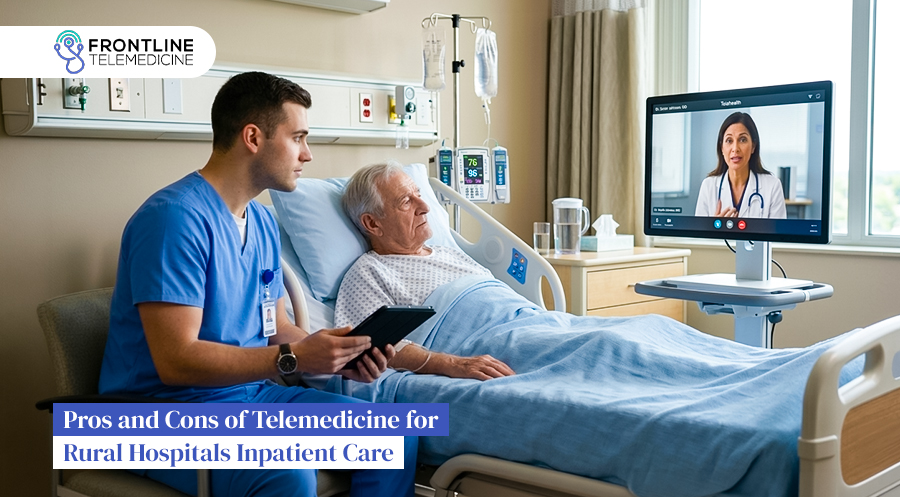
Rural hospitals operate under relentless clinical pressure. Your care teams manage complex inpatient admissions, monitor patients overnight, and respond to sudden deteriorations — often with limited physician availability and constrained staffing budgets. Geographic isolation makes recruiting full-time hospitalists difficult, and the gap left by workforce shortages frequently forces costly patient transfers that strain community trust and hospital finances alike.
As a result, hospital leaders across the country are evaluating telemedicine — specifically rural inpatient telemedicine — as a practical strategy to extend physician support without expanding on-site headcount.
But virtual care is not a one-size-fits-all solution. The pros and cons of telemedicine in a rural hospital setting are distinct from outpatient telehealth. Understanding both sides helps administrators, CMOs, and clinical directors make confident, well-informed decisions for their facility.
This guide covers everything you need to know: what rural inpatient telemedicine actually involves, why hospitals are adopting it, a structured comparison of its advantages and limitations, key implementation considerations, and answers to the most common questions from hospital leadership.
What Is Telemedicine in a Rural Inpatient Setting?
Telemedicine refers to the delivery of clinical care through secure digital communication — including real-time video, electronic health records, and remote monitoring tools without requiring physical presence of a physician at the care site.
In a rural inpatient context, telemedicine goes far beyond a simple video call. It enables remote physicians including tele-hospitalists and tele-nocturnists to serve as the attending physician of record for admitted patients, providing:
- Virtual physician rounding and daily patient assessments
- Real-time review of laboratory results, imaging, and EHR documentation
- Admission evaluations, order entry, and treatment planning
- Overnight and weekend inpatient hospital coverage without an on-site physician
- Specialist consultations during hospitalization for complex cases
- Immediate clinical guidance when a patient’s condition changes unexpectedly
How Telemedicine Differs From Outpatient Telehealth
In the inpatient setting, the remote physician integrates directly with your nursing team, advanced practice providers, and on-site staff. They access the same patient data, participate in real-time clinical decisions, and maintain continuity of care across shifts — functioning as part of the hospital’s care team, not as a remote consultant.
Why Rural Hospitals Are Turning to Telemedicine in 2025 and Beyond
Rural health facilities aren’t adopting telemedicine for convenience — they’re doing it out of operational necessity. The structural challenges facing rural hospitals have reached a critical threshold:
Locum tenens physician costs have escalated to $150–$300 per hour, making sustained coverage financially unsustainable for small facilities
Over 2,200 rural hospitals are at financial risk of closure, with physician shortages as the primary driver (American Hospital Association, 2023)
More than 60 million Americans live in rural areas with limited or no access to primary care physicians (HRSA)
The average cost of a single unnecessary patient transfer ranges from $10,000 to $35,000 per event
The High Cost of Locum Tenens vs. the Tele-Hospitalist Model
| Factor | Locum Tenens Physician | Tele-Hospitalist Model |
| Cost | High — travel, lodging, agency fees | Lower — no travel/lodging costs |
| Availability | Based on scheduling availability | On-demand; 24/7 including overnight |
| Care continuity | Variable — new provider each rotation | Consistent team familiar with protocols |
| Credentialing time | Weeks to months per physician | Pre-credentialed; faster onboarding |
| Scalability | Limited by physician supply | Scalable to census and coverage needs |
Maintaining Overnight and Weekend Clinical Coverage
One of the most acute operational challenges for rural hospitals is overnight inpatient coverage. Hiring a physician to be physically present every night regardless of census, is cost-prohibitive for most facilities under 50 beds. Telemedicine solves this through the Tele-nocturnist model: a remotely based physician monitors admitted patients, responds to clinical changes, and supports nursing staff throughout the night via secure video and integrated EHR access.
Pros and Cons of Telemedicine for Rural Hospitals: Quick Comparison
The table below summarizes the key advantages and limitations of telemedicine in rural inpatient care.
| Advantages of Telemedicine | Limitations of Telemedicine |
| 24/7 physician coverage without full staffing costs | Requires reliable broadband infrastructure |
| Reduces unnecessary and costly patient transfers | Cannot fully replace physical examination |
| Access to specialist expertise at the point of care | HIPAA compliance and cybersecurity demands |
| Faster clinical decisions at critical moments | Staff training and workflow adjustment |
| Improves care continuity across all shifts | Patient hesitation with virtual interactions |
| Flexible, scalable physician workforce planning | Billing and reimbursement complexity |
| Builds patient confidence in local hospital care | Upfront technology and IT infrastructure costs |
Advantages of Telemedicine in Rural Inpatient Care
1. 24/7 Physician Availability Without Full-Time Staffing Costs
Perhaps the most significant advantage for rural facilities: telemedicine enables continuous inpatient hospital coverage including overnight and weekend shifts without the expense of a full-time on-site hospitalist. A tele-hospitalist team can provide physician-level oversight across every admitted patient, every hour of the day, at a fraction of the cost of traditional staffing models.
This directly addresses the most urgent operational gap in rural hospital care.
2. Reducing Unnecessary Patient Transfers
When a rural hospital lacks physician coverage or specialist access, the default response to complex cases is often patient transfer. Each transfer carries significant cost — financial and clinical. With telemedicine, remote physicians and specialists can evaluate complex cases in real time, guiding treatment decisions that keep appropriate patients in their community hospital.
Reducing unnecessary transfers improves patient outcomes, preserves community trust, and protects hospital revenue.
3. Access to Specialist Expertise at the Point of Care
Rural communities rarely have immediate access to subspecialists, cardiologists, pulmonologists, neurologists, or intensivists. Telemedicine platforms allow your bedside team to connect with these specialists during active inpatient cases, enabling richer clinical discussions and more confident diagnostic decision-making without requiring patient transport.
4. Strengthening Patient Confidence in Local Care
Research shows that 92% of patients believe telemedicine makes managing their health easier (JDPOWER, 2022). When patients in a rural hospital see that their care team has real-time access to specialist physicians even remotely it reinforces confidence in the hospital’s capabilities and reduces the perception that quality care is only available in urban centers.
5. Faster Clinical Decision-Making at Critical Moments
In emergent inpatient situations a patient’s sudden hemodynamic instability, a new neurological change, a critical lab value time is the most valuable resource. Telemedicine systems give remote physicians instant access to real-time monitoring data, imaging, and EHR notes, enabling them to guide clinical teams within minutes rather than waiting for an on-call physician to drive in.
6. Improved Care Coordination Across Hospital Teams
Effective inpatient care depends on seamless coordination between physicians, nurses, advanced practice providers, pharmacists, and specialists. Tele-cross coverage services support structured virtual rounding and cross-disciplinary communication, bringing multiple professionals into the same clinical conversation — regardless of physical location.
7. Flexible, Scalable Physician Workforce Planning
Rural hospital census fluctuates. A telemedicine-based physician staffing model allows administrators to scale coverage up or down based on actual patient volume, without the fixed costs of permanent staffing expansion or the logistical challenges of repeated locum tenens recruitment.This flexibility makes telemedicine for small hospitals an effective solution for maintaining consistent inpatient physician coverage while controlling operational costs.
Disadvantages of Telemedicine in Rural Inpatient Care
A balanced evaluation of telemedicine also requires understanding its limitations. While these challenges are important, most can be addressed with proper planning and implementation.
1. Dependence on Broadband and Technology Infrastructure
Telemedicine relies heavily on stable internet connectivity and technology systems. In many rural areas, inconsistent broadband access can disrupt virtual consultations and affect care delivery. Hospitals must assess network capacity, backup systems, and IT support before implementing telemedicine solutions. Limited rural internet access remains a key barrier that often requires additional infrastructure investment.
2. Limitations of Virtual Physical Examinations
Telemedicine cannot fully replace hands-on clinical examinations. Certain assessments require direct patient interaction, making it difficult for remote physicians to evaluate some conditions accurately. In these cases, physicians often depend on bedside nurses or advanced practice providers to assist with patient evaluation. Telemedicine works best as a support system rather than a complete replacement for in-person care.
3. HIPAA Compliance and Cybersecurity Risks
Telemedicine platforms handle sensitive patient information and require strong security measures. Hospitals must use secure, HIPAA-compliant systems with encryption, protected access, and proper data management practices. Without adequate safeguards, digital healthcare systems may face cybersecurity risks.
4. Clinical Workflow Changes and Staff Training Needs
Introducing telemedicine often requires changes to existing workflows. Staff members need training on communication procedures, documentation processes, and using shared systems effectively. Without proper onboarding and training, implementation can become inefficient and create operational challenges.
5. Patient Comfort With Virtual Care
Some patients, particularly older adults or those less familiar with technology, may feel hesitant about interacting with physicians through virtual platforms. Support from bedside staff can help patients feel more comfortable and improve confidence in the care process. As telehealth adoption increases, patient familiarity continues to improve.
6. Reimbursement and Billing Complexity
Telemedicine billing policies can be complex and vary by payer and location. Hospitals must manage coding requirements, reimbursement rules, and coverage policies carefully. Without appropriate billing processes, organizations may experience reimbursement challenges that affect financial outcomes.
Key Considerations Before Implementing Inpatient Telemedicine
Assess Your Hospital’s Technology Infrastructure
Evaluate your network bandwidth, EHR interoperability, and hardware requirements before selecting a telemedicine platform. Ensure you have redundant internet connectivity, secure video conferencing capability, and integration pathways with your existing hospital information system (HIS). Engage your IT team early in the planning process.
Physician Credentialing and State Licensure Compliance
Remote physicians providing inpatient coverage must be credentialed by your hospital and hold appropriate state licensure. Review your credentialing policies for efficiency — the Interstate Medical Licensure Compact (IMLC) now allows eligible physicians to obtain licenses in multiple states more quickly, which is beneficial for telemedicine programs with physicians practicing across state lines. Verify malpractice coverage and telehealth specific liability requirements with your legal counsel.
Integrating Telemedicine With Your Clinical Workflows
Define clear protocols for how remote physicians will interact with bedside teams during different clinical scenarios: routine rounding, urgent clinical changes, admission evaluations, and emergency situations. Establish communication escalation pathways and ensure all team members understand their role in the virtual care model before going live.
Evaluating Financial Sustainability and ROI
Build a complete financial model before committing. Consider:
- Cost of the telemedicine platform: typically $5,000–$15,000 in setup plus ongoing licensing fees
- Physician service contract costs vs. current locum tenens expenditure
- Revenue impact of reducing patient transfers (each transfer avoided can save $10,000–$35,000)
- Reimbursement revenue from CMS-eligible telemedicine services
- Long-term workforce stability value means reduced reliance on agency physicians
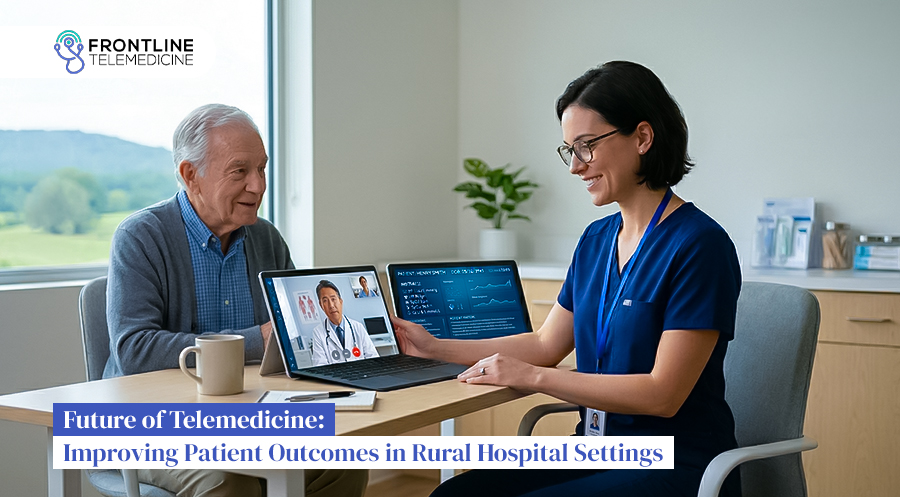
The Future of Telemedicine in Rural Inpatient Care
Telemedicine is no longer an experimental supplement to rural hospital care — it is becoming a structural component of sustainable inpatient operations. Several trends are accelerating this shift:
- Post-pandemic telehealth flexibilities have been codified into permanent CMS policy for rural and Critical Access Hospitals, providing long-term financial viability for telemedicine-based staffing models.
- Connected devices that transmit real-time vitals, glucose levels, cardiac data, and oxygen saturation directly to remote physician dashboards are expanding the clinical scope of inpatient telemedicine beyond video consultation.
- Machine learning tools embedded in telehealth platforms are beginning to flag early warning signs of clinical deterioration, supporting remote physicians with predictive analytics.
- Store-and-forward technology, where clinical data is captured and reviewed by a remote physician outside of real-time interaction, is expanding the efficiency of specialist consultation workflows.
For rural hospital leaders, the future of telemedicine is becoming increasingly clear. It is evolving beyond a temporary solution for staffing challenges and becoming a long-term approach for delivering sustainable, high-quality inpatient care in under-served communities.
Frequently Asked Questions About Telemedicine in Rural Hospitals
What are the main pros and cons of telemedicine for rural hospitals?
The primary advantages include 24/7 physician coverage at lower cost, reduced unnecessary patient transfers, specialist access at the bedside, and faster clinical decision-making. The main limitations include broadband dependency, virtual exam limitations, HIPAA compliance demands, staff training requirements, and billing complexity. In most rural inpatient settings, the clinical and financial benefits outweigh the limitations when implementation is planned correctly.
Is telemedicine effective for inpatient care in rural hospitals?
Yes. Clinical research demonstrates that inpatient telemedicine programs — particularly the tele-hospitalist model — enable rural hospitals to maintain continuous physician coverage, reduce preventable patient transfers, and improve clinical outcomes. Studies show patients engaged in telemedicine-supported care experience 38% fewer hospital admissions compared to traditional care models.
How does overnight telemedicine coverage work in a rural hospital?
A tele-nocturnist — a remotely based hospitalist physician — monitors all admitted patients overnight via secure video and integrated EHR access. They respond to clinical changes identified by bedside nursing, conduct real-time video assessments, manage orders, and provide the same physician-level oversight as an on-site night physician, without the cost of physical presence.
Can telemedicine replace in-person care at rural hospitals?
No. Telemedicine is designed to supplement, not replace, bedside clinical care. It extends physician availability and specialist access, but physical examination, procedures, and hands-on interventions require on-site clinical staff. The model works best as a partnership between remote physicians and bedside teams.
Is telemedicine reimbursed by Medicare in rural areas?
Yes. CMS has permanently expanded telehealth reimbursement for rural and Critical Access Hospital settings. Eligible services include physician consultations, remote patient monitoring, and virtual evaluations. Hospitals should confirm current CPT codes and originating site requirements with their billing team to maximize reimbursement capture.
Is Telemedicine the Right Solution for Your Rural Hospital?
Telemedicine has become a valuable solution for rural hospitals dealing with physician shortages, rising staffing costs, and the need for continuous inpatient coverage. Benefits such as improved physician access, reduced patient transfers, specialist support, and flexible staffing often outweigh implementation challenges when executed effectively.
At Frontline Telemedicine, we provide tele-hospitalist services designed for rural and Critical Access Hospitals. Our solutions support overnight coverage, weekend staffing, and integration with existing care teams to help hospitals maintain consistent inpatient care.
If you’re considering Telemedicine for your inpatient operations, connect with our team to learn how Frontline Telemedicine can support clinical coverage and operational efficiency.
About This Article: This guide was developed by the clinical and operational team at Frontline Telemedicine, tele-hospitalist specialists for rural and critical access hospitals. Information references guidelines from the Centers for Medicare & Medicaid Services (CMS), the American Hospital Association (AHA), and the Health Resources & Services Administration (HRSA).